Corroded Lavatory Fitting Found and Fixed Before the Damage Spread
Most bathroom leaks don't announce themselves. They just sit there - slowly dripping, slowly corroding, slowly soaking into the cabinet floor until one day you open the door and find a mess. That's exactly the kind of situation we caught here.
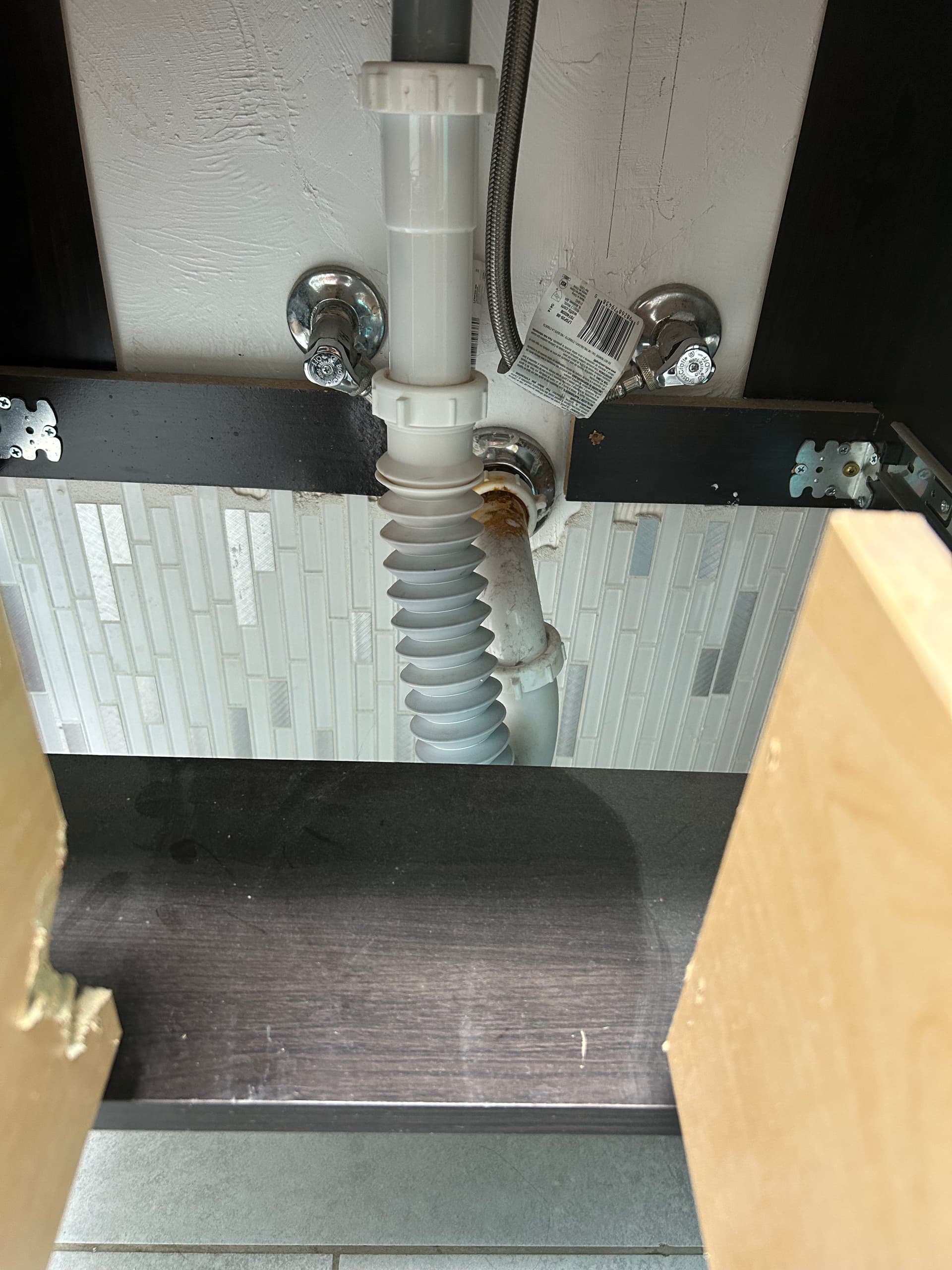
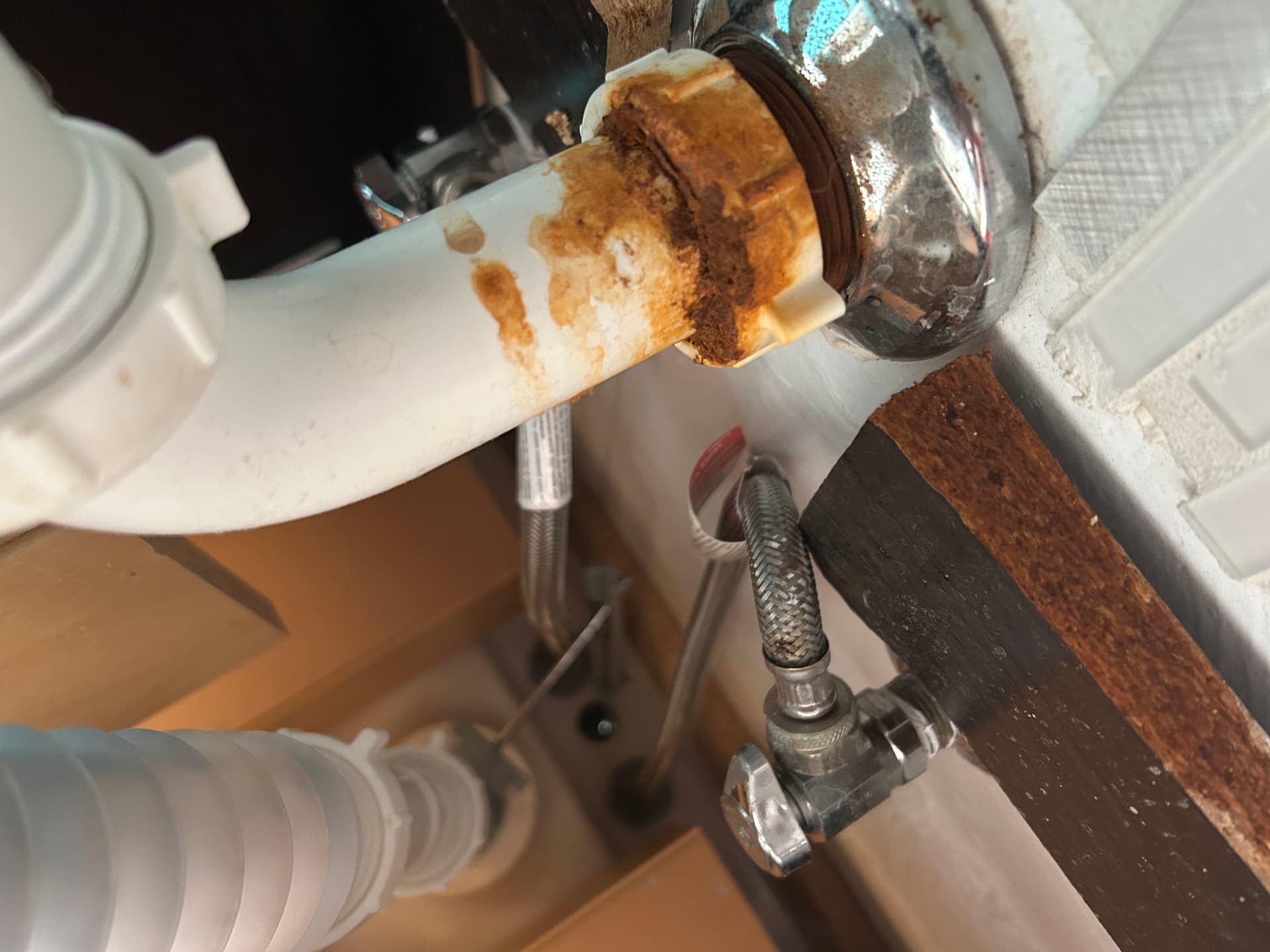
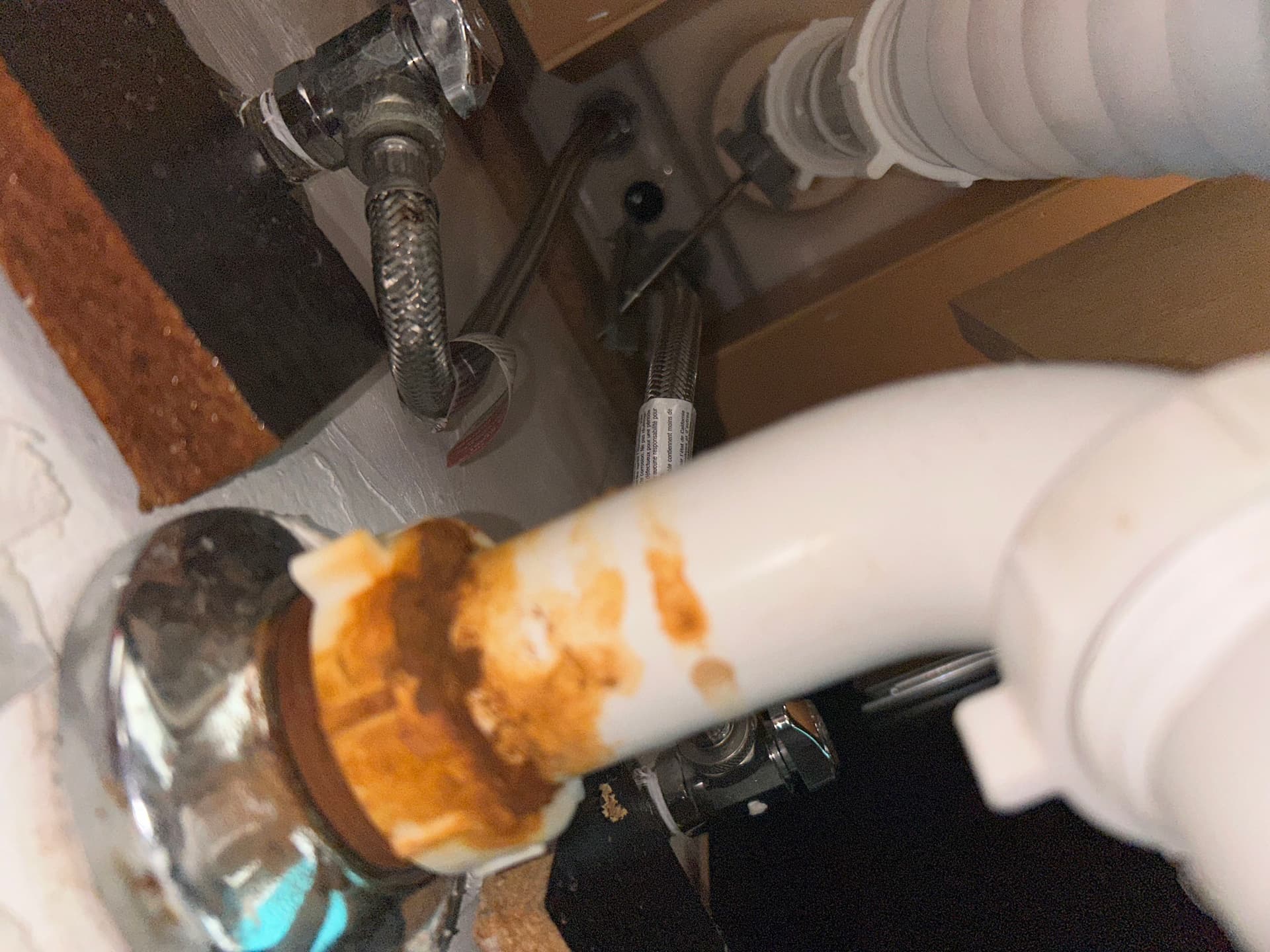
The culprit was a corroded fitting right where the drain connects under the lavatory. That rust and mineral buildup you can see on the fitting wasn't just cosmetic. It had eaten through enough of the connection to let water escape every time the sink drained. Left alone, that's the kind of thing that warps cabinet floors, soaks into drywall, and eventually turns a simple repair into a much bigger job.
This is where leak detection really earns its keep. It's not always a burst pipe or a dramatic flood. Sometimes it's a slow, hidden drip that nobody notices until real damage is done. We tracked down the source, pulled the failing fitting, and got a proper repair in place - clean connections, no more seeping water, no more guessing.
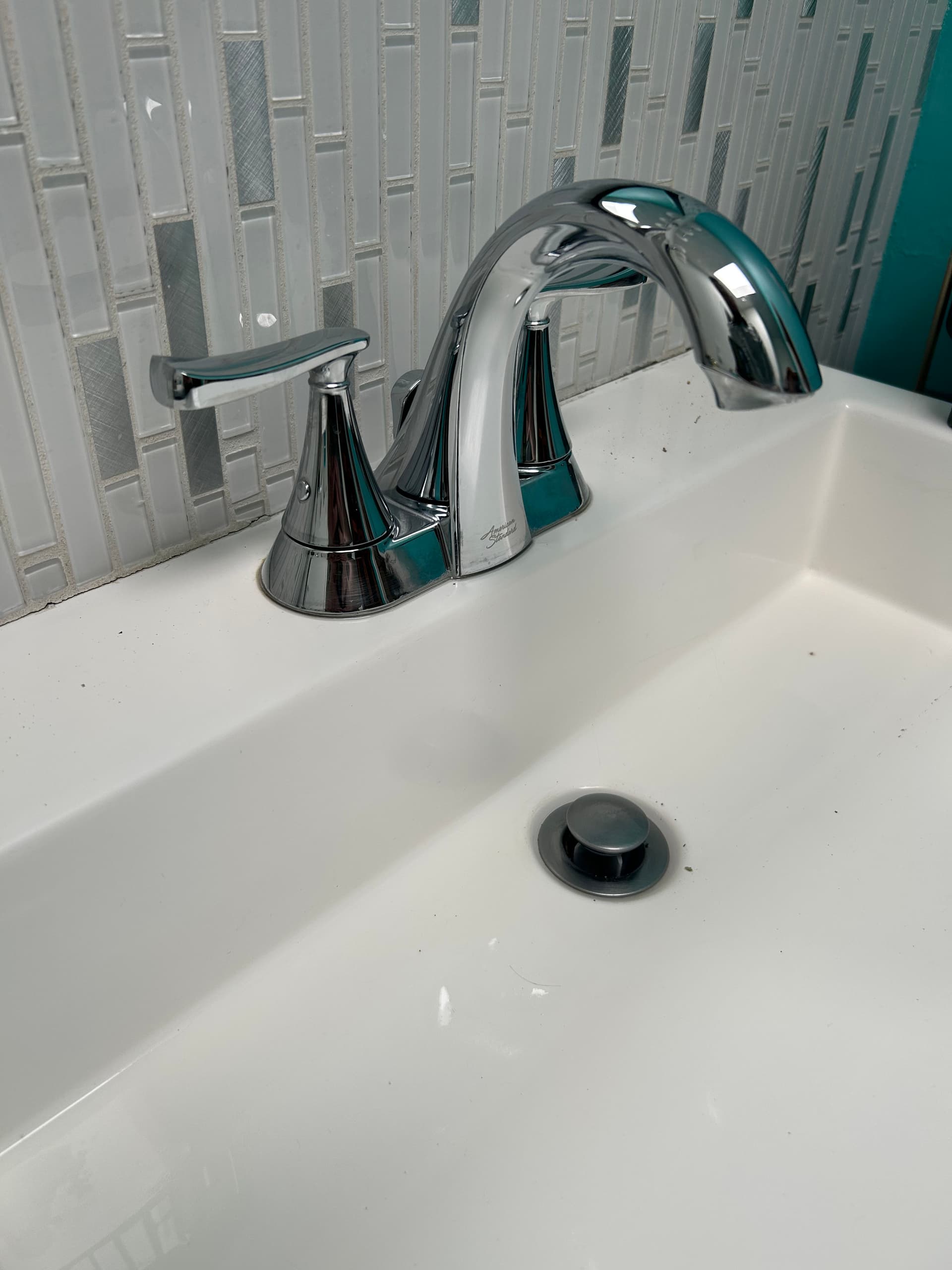
The sink up top looks great. Chrome faucet, clean basin, nice tile backsplash. The kind of bathroom you want to keep that way. That's the whole point - catching what's going wrong underneath before it ruins what's working fine above.
If you've noticed moisture, a musty smell, or soft spots in your vanity cabinet, don't wait on it. These things don't get better on their own. A quick look from a plumber can tell you exactly what you're dealing with - and whether it's a simple fix or something that needs more attention.